If you own or manage an RV park around Eastern Idaho, you already know your real front door isn’t your website. It’s the smartphone screen of a traveler driving down I-15 or Highway 20 at 4:00 PM, with a tired family, looking for a clean spot to park their rig for the night.
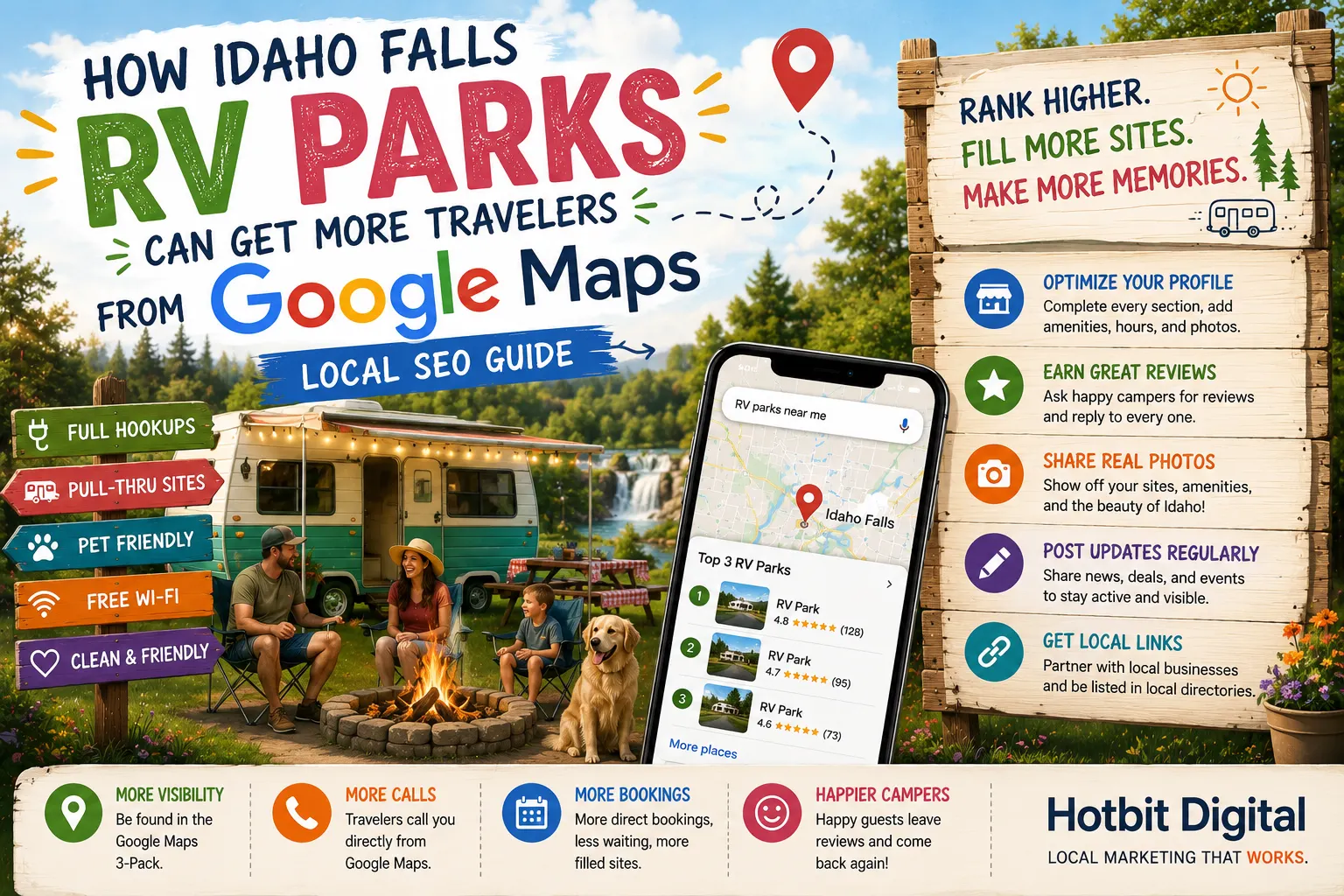
When people pull over to search for “RV parks near me,” they almost never look past the first three map results that pop up on Google. Getting your park into those top three slots—called the Google Maps 3-Pack—is the absolute fastest way to fill your pull-through sites and keep your occupancy high all season.
You don’t need a massive corporate marketing budget to win these guests over. You just need to show Google’s system exactly what real campers are looking for. Here is a no-nonsense guide to making that happen.
Why Google Maps Rankings Matter for RV Parks
Google Maps has become the modern travel directory. When someone searches for an RV park, Google evaluates hundreds of factors before deciding which businesses appear at the top of local search results. For RV park owners, appearing in the Google Maps 3-Pack can mean:
- Instant Eyeballs: You catch drivers exactly when they are tired and ready to park.
- More Direct Bookings: Travelers go straight to your own reservation page, meaning you don’t have to pay high commission fees to third-party booking sites.
- More Phone Calls: Drivers can click a single button on their screen to call your front desk instantly while on the road.
Whether your campground serves travelers near downtown Idaho Falls, Interstate 15, or surrounding areas including 83401, 83402, 83403, 83404, 83405, 83406, and 83415, local visibility can make a significant difference in occupancy throughout the season.
For campground owners who want a deeper starting point, Hotbit Digital’s Local SEO Checklist for Idaho Falls Businesses can help explain the core steps local businesses should follow to improve search visibility.
What Makes an RV Park Rank Higher on Google Maps?
Google tries to act like a helpful local tour guide. It looks at three basic things to decide which RV parks to show at the top of the map:
1. Proximity (How close you are)
How close is your RV park to the person searching? While you can’t move your physical property, you can make sure your online profile clearly mentions the highway exits, nearby landmarks, and specific routes you sit on so Google knows you are a convenient stop.
2. Relevance (Do you have what they asked for?)
Does your business listing match what the camper needs? If someone types in RV park with full hookups, pull-through RV sites near Idaho Falls, or pet-friendly campground, Google scans your profile to make sure you explicitly offer those exact features.
3. Prominence (How popular and active are you online?)
Google wants to recommend safe, open, and reliable businesses. It measures this by looking at your recent customer reviews, star ratings, how often you update your profile, and whether other local websites mention your park.
Optimize Your Google Business Profile Like a Pro
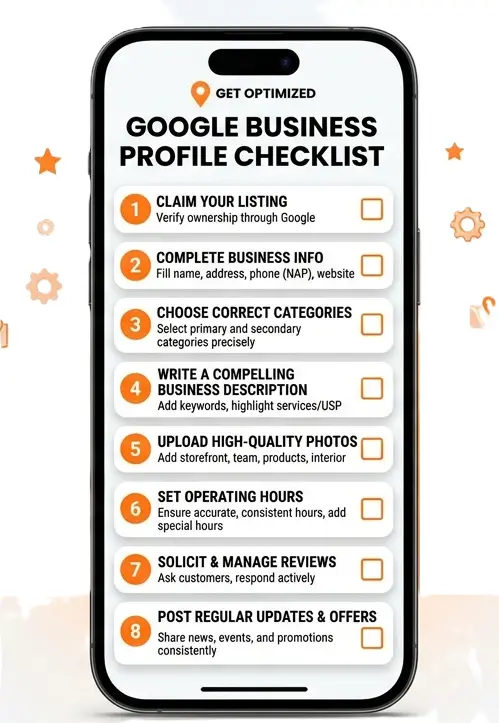
Your Google Business Profile is your park’s digital billboard. Many campground owners fill it out once and never touch it again. That is a major missed opportunity because an active profile gets favored by Google.
Choose the Right Business Categories
Google needs to know exactly what you are. Set your primary category to RV Park. If you offer extra space for tents or long-term residents, you can add secondary categories like Campground or Mobile Home Park to help you show up in more types of searches.
Complete Every Section
Don’t leave blanks. Fill out your official business name, physical address, local phone number, website link, and exact holiday hours. Write a friendly business description that talks about your park, your amenities, and how easy it is to find you from the main highway.
Add the Amenities RV Travelers Search For
Campers don’t want surprises after a long drive. Go into your profile settings and check the boxes for specific features travelers look for, such as:
- 30-amp and 50-amp electricity hookups
- Pull-through sites and full water/sewer connections
- On-site dump stations and laundry rooms
- Free Wi-Fi, hot showers, and dedicated dog parks
- Long-term or monthly stay options
Use Idaho Falls Location Signals Naturally
Google wants to be 100% sure you actually serve the local area. Instead of repeating “Idaho Falls” a hundred times on your website, naturally mention the local towns and neighborhoods you cover. For example:
“Our RV park serves travelers throughout Idaho Falls and nearby communities, including areas within ZIP codes 83401, 83402, 83403, 83404, 83405, 83406, and 83415.”
You can easily include these details on your website’s contact page, driving directions page, or in a brief FAQ section without it looking forced or robotic.
Add Real Photos That Build Trust
Never use fake stock photos from the internet. Campers see right through them. Instead, take real snapshots with your phone and upload them regularly. Show off your wide pull-through spaces, your utility pedestals, clean bathrooms, laundry facilities, and the beautiful Idaho sunsets over your park. Fresh photos show Google that your business is open and active.
How Many Reviews Does an RV Park Need to Rank Higher?
There is no magic number of reviews that guarantees a top spot. What matters most is consistency and recency. An RV park that gets two or three fresh reviews every single week looks much more active and reliable to Google than a competitor who has 200 reviews from three years ago but none from this month.
Ask for Reviews at the Right Time
The best time to ask for a review is right around checkout time when guests are happy with their stay. Send a quick, friendly text or email with a direct link to your Google profile:
- “Thank you for staying with us! If you enjoyed your site, we’d appreciate it if you left us a quick review on Google.”
Respond to Every Review
Take a moment to reply to every single review, whether it’s positive or negative. It shows potential guests that you care about customer service. Plus, you can use your replies to naturally mention features of your park:
- “Thanks for staying with us, Mike! We’re glad you enjoyed our 50-amp pull-through sites and our close location to the Yellowstone route. Safe travels!”
Improve Your Website for Local Search
Your website and your Google Maps profile work as a team. If a traveler clicks the “Website” button on Google Maps and your site takes forever to load, looks terrible on a phone, or makes it hard to find prices, they will hit the back button and look for another park.
To keep travelers on your site, make sure your homepage is incredibly easy to read on a mobile phone and features:
- A prominent “Click to Call” button for easy dialing.
- Clear, upfront nightly rates and seasonal availability.
- Simple, step-by-step driving directions from the major highways.
- A big, obvious “Book Now” button so they can reserve a site instantly.
Create Helpful Content for RV Travelers
Creating helpful guides on your website allows you to catch travelers while they are still planning their trip, long before they even arrive in Eastern Idaho. Think about the questions real campers type into Google:
- Which campgrounds near Idaho Falls have full hookups?
- Is Idaho Falls a good place to stop on the way to Yellowstone?
When your website answers these questions in a clear, friendly way, Google rewards you with better visibility. You can write simple blog posts or add an FAQ page covering topics like:
- The Ultimate RV Travel Guide from Idaho Falls to Yellowstone
- Best Pet-Friendly Stops and Dog Parks in Eastern Idaho
- What to Expect When Booking a Long-Term RV Stay in Idaho Falls
Build Local Trust With Citations and Backlinks
Google cross-checks your business details across the web to make sure you are a real, trustworthy operation.
- Citations (Online Phone Books): Make sure your business name, address, and phone number are spelled exactly the same way on your website, Google profile, Facebook page, Yelp, and major RV directories. Even minor differences (like writing “Avenue” on one site and “Ave” on another) can confuse Google’s system.
- Backlinks (Digital Word-of-Mouth): When other reputable local websites link back to your website, Google views it as a major vote of confidence. Try to get your park listed on the Greater Idaho Falls Chamber of Commerce site, local tourism blogs, and regional outdoor recreation pages.
How Long Does RV Park SEO Take?
Improving your presence on Google Maps is a lot like growing a garden—it takes a bit of time and steady maintenance to see the best results. Generally, it takes about 3 to 6 months to see a steady increase in bookings.
- Months 1 & 2: You spend time cleaning up your business details across the web, setting up your Google profile correctly, and starting your review system.
- Months 3 & 4: Google starts to trust your information. You will typically notice more phone calls, more website clicks, and more people asking for driving directions to your park.
- Months 5 & 6+: Your park establishes a strong reputation online, helping you stay near the top of search results and keeping your sites consistently booked throughout the season.
Common Local SEO Mistakes RV Park Owners Should Avoid
Many great campgrounds lose business simply because of a few easily fixable online mistakes. Check your digital footprint for these common errors:
- Leaving your Google profile half-empty or unverified.
- Having different phone numbers or addresses listed on different websites.
- Going months without getting any new customer reviews.
- Ignoring reviews or leaving customer questions unanswered.
- Having a slow website where the “Book Online” button is hidden or broken on mobile screens.
DIY SEO vs. RV Park SEO Services
Deciding whether to handle your online marketing yourself or hire an expert comes down to how much free time you have on your hands.
Doing It Yourself
If you have a few extra hours a week, you can absolutely handle the basics yourself. Focus on updating your photos, replying to your guests’ reviews, and ensuring your business hours are correct. It doesn’t cost anything but your time.
Hiring RV Park SEO Services
If you are busy running the physical campground—managing staff, cleaning facilities, and welcoming guests at the counter—handling online marketing can feel overwhelming. Hiring a professional team takes the weight off your shoulders. Experts can handle the technical website updates, track your local rankings, fix messy directory listings, and build a strategy that brings in steady bookings while you focus on your guests.
Why Google Business Profile Optimization Matters for Bookings
Think of your Google profile as a quick-decision tool for a tired driver. Before they pull off the highway, they use your profile to check your rating, look at pictures of your layout, see if you have 50-amp power, and check how close you are to their route.
If your profile answers all their questions in three seconds, they will click your number and book a site immediately. If your profile is missing information, they won’t waste time calling to ask—they will simply move on to the next park on the map. This makes your profile your most valuable tool for landing immediate bookings.
Grow Your RV Park With Hotbit Digital
At Hotbit Digital, we take the guesswork out of online marketing. We help local businesses in Eastern Idaho get noticed online, attract better customers, and grow without the confusing tech jargon.
We partner with businesses that rely on local search traffic to survive, including RV parks, campgrounds, and hospitality companies. Our team can take over your Google profile management, fix your website speed, and build an online presence that puts your campground right in front of travelers the exact moment they need a place to stay.
Ready to fill your pull-through sites and stand out on Google Maps? Get in touch with Hotbit Digital today to see how we can help.
Frequently Asked Questions by RV Parks Owners
How do RV parks rank higher on Google Maps?
By completely filling out your Google profile, getting steady and fresh customer reviews, uploading real snapshots of your park, keeping your phone and address consistent everywhere, and making sure your website works perfectly on mobile phones.
What is RV park SEO?
SEO stands for Search Engine Optimization. For an RV park, it simply means setting up your website and your online profiles so that traveling campers can easily find you when they search on Google or Google Maps.
How long does RV park SEO take?
It usually takes about 3 to 6 months to build up strong, steady authority that keeps you at the top of the map results, though minor profile updates can show helpful results much faster.
Does a Google Business Profile really bring in more bookings?
Yes. Most travelers looking for a quick place to park for the night rely entirely on the map. If your profile makes your park look clean, close, and easy to book, it acts as a direct line for new reservations.
How many reviews should an RV park have?
There is no exact target number. Google cares more about how fresh your reviews are. A park getting two new reviews a week looks much more active than a park with 100 old reviews from last summer.
Should Idaho Falls RV parks use ZIP codes on their websites?
Yes, but only naturally. Listing the ZIP codes you serve on your contact or location pages helps Google understand your exact location without making your text read like a boring list of numbers.
What amenities should RV parks list on Google?
Make sure to list the critical elements campers look for: 30-amp and 50-amp hookups, pull-through spaces, full water and sewer connections, dump stations, Wi-Fi, showers, laundry facilities, and whether you allow pets.
Is local SEO worth it for campgrounds in Idaho Falls?
Absolutely. It is the most practical way to intercept travelers at the exact square mile and minute they are ready to pull off the road and stay the night.