Local SEO for cannabis dispensaries helps cannabis businesses appear in local search results when people look for nearby dispensaries, cannabis products, or related services. A strong local SEO strategy can help your dispensary improve online visibility, attract more relevant website visitors, and connect with customers in your service area.
However, cannabis businesses face unique challenges because cannabis laws, advertising policies, and platform rules vary by state and location. This makes it important to follow a search strategy that focuses on useful content, accurate business information, and local relevance.
In this guide, you will learn how local SEO works, how to optimize your dispensary website, how to improve local search visibility, and when to work with a professional cannabis SEO agency.
For example, someone might search for:
Local SEO helps search engines understand where your dispensary operates, what products or services it offers, and which local searches are relevant to your business.
The goal is not simply to get more website traffic. It is to help people in your service area find accurate information about your business and take the next appropriate step.
The cannabis industry has specific marketing challenges. Advertising restrictions, changing regulations, and platform policies can limit some promotional options. Organic search can provide another way for customers to discover a dispensary.
Here are some of the main benefits of cannabis dispensary local SEO.
When someone searches for a dispensary in a particular city or neighborhood, search engines use several signals to determine which businesses and web pages to show.
Relevant location information, useful website content, accurate business details, and strong local relevance can help your dispensary compete for these searches.
Local SEO helps you focus on the locations your dispensary actually serves.
For example, a dispensary in San Diego may target relevant searches associated with San Diego neighborhoods rather than broad national terms that are unlikely to bring nearby customers.
Customers want to know whether a dispensary is licensed, where it is located, when it is open, and what products or services it offers.
Clear contact details, accurate hours, transparent policies, and helpful website content make it easier for customers to make informed decisions.
A well-optimized dispensary website can attract visitors searching for location details, product information, store policies, and answers to common questions.
This traffic is more useful when it comes from people who are actually within your service area and interested in what your business provides.
SEO is not an instant solution. Rankings can take time to improve, and results depend on competition, website quality, location, and other factors.
However, consistently improving your website and local presence can help build a stronger foundation for long-term organic visibility.
Local SEO generally involves three important concepts: relevance, distance, and prominence.
These concepts help explain why two dispensaries in the same city may appear differently for the same search.
You cannot control every ranking factor, especially the searcher’s location. However, you can improve your website, keep business information accurate, and build a credible online presence.
The following steps can help dispensary owners build a practical local SEO strategy.
Keyword research helps you understand what potential customers search for when looking for a dispensary or cannabis-related information.
Replace the location placeholders with the cities and neighborhoods your business genuinely serves.
You should also research informational keywords, such as questions about store policies, product categories, purchase requirements, and local regulations.
Keyword stuffing does not make a page more helpful. Focus on answering the searcher’s question clearly.
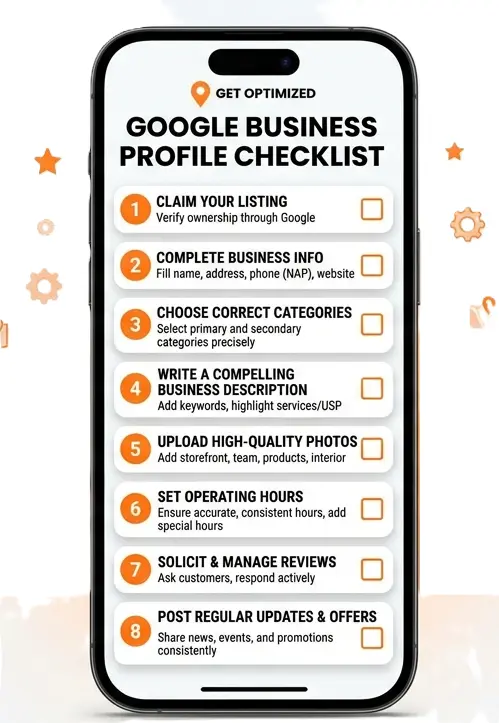
A Google Business Profile can help eligible businesses manage their information across Google Search and Maps.
However, cannabis businesses must pay special attention to Google’s policies and applicable laws. Cannabis-related business categories, products, and services may be subject to restrictions. Do not assume that every dispensary or cannabis-related business is eligible for a profile or that every feature is permitted.
Before creating or editing a profile, review Google’s current guidelines and confirm that your specific business and activities qualify.
If your business is eligible, keep the following information accurate:
Use your real business name and location. Do not add extra keywords to your business name or create misleading listings to improve rankings.
Accurate information helps customers find your business and reduces confusion.
Your website is an important part of your cannabis dispensary SEO strategy. It should make it easy for both visitors and search engines to understand what your business offers and where it operates.
These improvements form part of effective SEO for a cannabis website and help create a better user experience.
If your dispensary has multiple physical locations, create a dedicated page for each eligible location.
A useful location page should include information that is specific to that store, such as:
For example, a dispensary with locations in Denver and Boulder should provide distinct, accurate information for each store.
Avoid creating dozens of nearly identical pages for cities where you do not have a genuine location or serve customers in a meaningful way. Such pages can provide little value and may create search quality problems.
Location pages should help customers answer practical questions, not simply repeat city names to target more keywords.
Search engines and customers need accurate information about your business.
Your business name, address, and phone number are commonly referred to as NAP information.
Check that these details are consistent across your website and legitimate business directories.
If your dispensary moves to a new location, update the relevant listings and website pages as soon as possible.
You should also review directory policies before submitting cannabis business information. Not every directory accepts cannabis-related businesses.
Consistent information makes it easier for customers to contact your business and helps reduce confusion across the web.
Customer reviews can influence how people evaluate a dispensary before visiting.
To build a trustworthy review process:
If a customer reports a problem, acknowledge the concern and offer an appropriate way to resolve it. Authentic reviews and professional responses help potential customers understand what to expect from your business.
These mentions may appear in business directories, local publications, industry directories, or community websites.
Relevant local links can also help search engines discover your website and understand its connections to the local community.
For a cannabis dispensary, useful opportunities may include legitimate local business associations, relevant industry organizations, local news coverage, and community publications that accept cannabis-related businesses.
To build a stronger local presence:
Quality and relevance matter more than collecting a large number of low-quality links.
Content marketing can help your dispensary answer common customer questions and attract relevant organic traffic.
Instead of publishing only promotional articles, create content that helps people understand your products, policies, and local requirements.
Potential blog topics include:
Make sure all content is accurate, current, and appropriate for your audience.
Cannabis laws differ across states and local jurisdictions. Verify legal claims against reliable official sources, and avoid presenting general information as legal advice.
You should also review applicable advertising, age-restriction, and platform rules before publishing content that promotes cannabis products.
Helpful content can support search visibility, answer customer questions, and give other relevant websites a reason to link to your site.
Technical SEO helps search engines discover, crawl, and understand your website.
Even a website with useful content may struggle if important pages are inaccessible or difficult to navigate.
For example, eligible local business pages may benefit from appropriate LocalBusiness structured data. Markup must reflect visible, accurate information, and adding it does not guarantee a rich result or better rankings.
Technical SEO is an important part of professional cannabis SEO services because it helps provide a sound foundation for other optimization work.
You need to measure your progress to understand which activities are working.
Useful tools include Google Search Console, website analytics software, and eligible business profile performance reports.
Do not judge success by rankings alone. A keyword may rank well without bringing relevant visitors, while another page may attract fewer visitors who are more likely to contact your business. Review performance monthly, investigate significant changes, and update your strategy based on the data.
Even a well-established dispensary can miss opportunities because of basic SEO problems.
Here are some mistakes to watch for.
Creating pages for cities where your business has no meaningful presence can lead to thin, repetitive content.
Focus on your actual locations and service areas. Every location page should provide genuine value.
Many people search for local businesses on their phones. A slow or confusing mobile website can make it harder for them to find directions, contact details, or store information.
Test your website regularly on mobile devices.
Copying the same content across several location pages makes it difficult to provide unique value. Write useful, location-specific content that reflects the actual services and details of each store.
Cannabis businesses may face restrictions that do not apply to many other industries.
Review current platform policies before using business profiles, product listings, advertising tools, or promotional features. Eligibility can vary according to the business and the specific activity.
Large numbers of irrelevant or manipulative backlinks can create SEO risks.
Focus on earning relevant links through useful content, legitimate partnerships, and genuine local recognition.
SEO generally requires ongoing work. Competition, website history, technical issues, and local market conditions all affect how quickly performance may improve.
Set realistic goals and measure progress over time.
A specialized cannabis SEO agency may help you develop a strategy, improve website performance, and manage ongoing optimization.
Before choosing an agency, consider the following factors.
Look for a team that understands cannabis businesses, local search, and the rules that may affect your website and marketing activities.
Ask about experience with dispensary websites, location-based SEO, and businesses operating in regulated markets.
A reliable provider should explain what it will do and why.
Depending on your needs, cannabis SEO services may include:
The scope should be clearly defined before work begins.
Ask how the agency measures progress and how often it provides reports.
Reports should explain changes in organic traffic, relevant keyword performance, technical health, and meaningful business outcomes.
Be cautious of providers that guarantee a specific Google ranking or promise immediate results.
A cannabis SEO company should understand that cannabis-related businesses may be subject to specific platform restrictions and changing legal requirements.
Ask how the agency checks eligibility and handles policy changes. It should not recommend tactics that rely on misleading business information or attempts to bypass platform rules.
Every dispensary has different goals, competition, locations, and website needs.
The agency should review your current online presence and explain which improvements are most important for your business.
A cannabis SEO agency should be able to explain its recommendations in simple terms rather than relying on complicated reports without clear next steps.
The right choice depends on your budget, internal resources, and the complexity of your website.
A professional agency can provide specialized support, but it is important to compare its services, reporting practices, experience, and costs before making a decision.
The cost of local SEO depends on the work required, the number of locations, the competitiveness of your market, and the condition of your website.
A basic project may focus on a website audit, keyword research, and essential on-page improvements. A larger campaign may include technical SEO, ongoing content creation, location page optimization, local reputation management, and monthly reporting.
Before hiring a provider, ask for a clear proposal that explains:
Avoid choosing a provider based only on the lowest price. The better option is one that offers a clear, realistic strategy aligned with your business goals.
Local SEO does not have a fixed timeline.
Some improvements, such as correcting business information or fixing broken links, can be completed quickly. However, measurable changes in organic visibility may take several weeks or months, depending on competition, website quality, and other factors.
A typical process includes:
These stages are a planning framework, not a guarantee of when rankings will improve.
Consistent optimization and regular measurement are more useful than making changes once and expecting lasting results.
Your SEO strategy should reflect how your dispensary operates.
If you operate one dispensary, focus on your primary location and the surrounding area you genuinely serve.
Prioritize accurate business information, a well-optimized location page, relevant local keywords, useful content, and a mobile-friendly website.
You do not need dozens of location pages if you operate only one store.
If your business has several physical stores, create a scalable system for managing each location.
Each location should have accurate contact details, appropriate local content, and a clear page structure.
For example, a business with locations in Los Angeles, San Diego, and Sacramento should maintain distinct pages with relevant information for each store.
Track performance by location so you can identify which stores need additional optimization.
Do not create misleading listings or use virtual locations to make your business appear closer to searchers.
Search is changing as AI-powered search engines and answer tools provide more direct responses to user questions.
Cannabis dispensaries can prepare for these changes by making their websites clear, accurate, helpful, and easy to understand.
Create sections that answer common questions in a few clear sentences before adding more detail.
For example, explain what local SEO means, how customers can find your dispensary, and what information they should check before visiting.
Direct answers can help readers understand your content quickly and may make it easier for search systems to interpret.
Organize each page around a central topic, with descriptive H2 and H3 headings.
Use short paragraphs, lists, and practical examples when they improve readability.
This structure benefits readers and helps search engines identify the main subjects covered by a page.
Include accurate business information, a clear contact page, and useful information about your business and locations.
For legal or regulatory topics, refer to reliable official sources and keep information updated.
Generic content is easy to reproduce. Useful details about your locations, store policies, customer questions, and local market can make your pages more valuable.
Where appropriate, use firsthand business knowledge and clearly identify the source of factual claims.
Ensure that important content is accessible, pages have clear titles, and the website works well on mobile devices.
Use structured data where appropriate, but remember that schema markup does not guarantee inclusion in AI-generated answers.
Important: No agency can guarantee that a website will appear in every AI-generated answer. The practical goal is to build a trustworthy, technically sound website that provides clear and useful information.
Use this checklist to review your current SEO efforts.
You can use this list as a starting point and prioritize the tasks that address the biggest problems on your website.
Looking to improve your dispensary’s local search visibility? Hotbit Digital can help you explore SEO solutions to strengthen your website, target relevant local keywords, and attract more relevant organic traffic. Choose a strategy focused on website optimization, local search visibility, and sustainable growth to help your cannabis business compete online.
The best strategy combines accurate business information, relevant local keyword targeting, useful location pages, a technically sound website, genuine customer reviews, and relevant local content. The right approach depends on your market, business eligibility, and competition.
Cannabis dispensary websites can appear in Google organic search results when their content and websites meet applicable policies and search quality requirements. However, local business features and promotional options may have additional eligibility restrictions. Rankings are never guaranteed.
Eligibility depends on Google’s current policies and the specific business and activities involved. Cannabis businesses should review the official guidelines before creating or managing a profile and should not assume all cannabis-related businesses qualify.
For businesses eligible to appear in Google Maps, focus on accurate business information, relevant website content, genuine reviews, and a credible local presence. Distance from the searcher also matters, and no optimization method can guarantee a particular Maps position.
Not necessarily. Some dispensaries can manage basic SEO internally. An experienced agency may be useful when a business needs technical support, multi-location optimization, a consistent content strategy, or help understanding industry-specific platform policies.
Cannabis SEO services are search optimization services designed for cannabis-related businesses. They may include keyword research, technical SEO, website content optimization, location pages, eligible local listing management, link-building strategy, and performance reporting.
There is no fixed timeline. Some technical corrections can be implemented quickly, while meaningful ranking and traffic improvements may take weeks or months. Competition, website condition, and the consistency of your SEO efforts all influence results.
Traditional SEO focuses broadly on improving a website’s visibility in organic search results. Local SEO places additional emphasis on location-related searches, business information, local relevance, and nearby customers.
AI-powered search tools may reference publicly accessible business information and web content when answering relevant questions. Inclusion is not guaranteed, and eligibility and policies may vary by platform. Accurate information, helpful content, and a strong technical foundation can improve the quality of your online presence.
Local SEO for cannabis dispensaries is an important part of building a reliable online presence. It helps potential customers find relevant information about your business, understand what you offer, and determine whether your location meets their needs.
Start with the basics: research local keywords, improve your website, maintain accurate business information, publish useful content, and track your performance. Then expand your strategy as your business and resources grow.
If you need specialized support, a cannabis SEO agency can help identify technical issues, develop a local content strategy, improve eligible business listings, and measure progress over time.
The most effective approach is to focus on useful information, accurate business details, genuine local relevance, and sustainable SEO practices while following applicable laws and platform policies.