Best White Label SEO Services for Agencies: A Practical Guide to Choosing the Right Partner

Running a small digital marketing agency often means wearing several hats. You may handle client acquisition, strategy, account management, web projects, paid advertising, social media, and reporting—all while trying to grow the business.

SEO is one of those services clients increasingly expect, but delivering it well requires specialized knowledge, consistent execution, content resources, technical expertise, and ongoing monitoring.
That creates a common problem for smaller agencies: you want to sell SEO, but you don’t necessarily want to build a complete SEO department.
This is where white label SEO can make sense.

A reliable white-label SEO company can handle the fulfillment side of SEO while your agency manages the client relationship. You can offer SEO under your own brand without having to hire a separate SEO strategist, technical specialist, content team, and other specialists before you’ve built enough recurring revenue to justify the investment.

But not every provider offers the same level of service.
If you’re looking for the best white label SEO services for your agency, the important question isn’t simply which company has the lowest price or the biggest list of services. You need to find a partner that understands agency workflows, produces work you can stand behind, communicates reliably, and can scale as your client base grows.

Why Small Agencies Are Turning to White Label SEO

For a small U.S.-based marketing agency, hiring an entire SEO team can be difficult to justify.

A single SEO campaign can involve keyword research, technical audits, content strategy, on-page optimization, local SEO, link building, analytics, reporting, and ongoing strategy.
You might need several different skill sets to deliver all of that consistently.
At the same time, your SEO client volume may fluctuate. You could have three SEO clients today and ten six months from now.
Building a large internal team before you have predictable demand creates unnecessary overhead.
Outsourcing gives you another option.
You can keep the client acquisition and relationship management inside your agency while an experienced SEO team handles some or all of the fulfillment.
For many small agencies, this creates a more flexible way to add SEO to their service offering.

When does outsourcing SEO make sense?

Outsourcing can be worth considering if:
  • Your clients are asking for SEO but you don’t have an internal SEO team.
  • Your existing team is already at capacity.
  • You want to add SEO without taking on full-time employees.
  • You have a strong web design or PPC business and want to expand your services.
  • You want to take on more SEO clients without increasing your internal workload.
  • You need access to technical SEO or content expertise that you don’t currently have.
  • You want to test SEO as a new recurring service before making a larger investment.
The right approach depends on your business model, margins, client expectations, and growth plans.

What Should You Expect From a White Label SEO Service?

A good white label SEO program should go beyond producing a few blog posts or sending a monthly ranking report.
SEO is a process.
The provider you choose should be able to understand where a website currently stands, identify opportunities, prioritize the work, execute the strategy, and measure what happens over time.
Depending on your clients’ needs, a white label SEO service may include:
  • SEO Strategy
  • Keyword Research
  • Competitor Analysis
  • Technical SEO
  • SEO Audits
  • On-Page SEO
  • Content Strategy
  • SEO Content
  • Internal Linking
  • Local SEO
  • National SEO
  • Off-Page SEO
  • Link-Building Strategy
  • Website Optimization
  • Performance Monitoring
  • SEO Reporting
You don’t necessarily need every service for every client.
A local HVAC company, an e-commerce business, a SaaS company, and a professional services firm may require completely different SEO strategies.
That’s one of the first things to evaluate when comparing white label SEO companies: does the provider build campaigns around the client, or does every client receive the same package?

Start With Strategy, Not a Checklist

One of the easiest ways to distinguish a serious SEO provider from a low-cost fulfillment vendor is to look at how it approaches strategy.

A website shouldn’t receive the same SEO checklist simply because it purchased an SEO package.

Before work begins, the provider should understand things such as:
  • What the business sells
  • Who the target customers are
  • Where those customers are located
  • Which products or services matter most
  • How competitive the market is
  • What competitors are doing
  • What the website already ranks for
  • Which pages generate traffic and leads
  • Where technical problems exist
  • Which content opportunities are available
  • What the business considers a successful outcome
This gives your agency a much stronger foundation for selling SEO to clients. Instead of telling a client, “We’re going to publish four articles and build some links,” you can explain why specific work is being prioritized and how it connects to the client’s business goals.

Keyword Research Should Connect Search Demand With Business Value

Keyword research is one of the foundations of SEO, but search volume alone shouldn’t determine what a campaign targets.
Consider the difference between:
  • What is digital marketing
  • Digital marketing agency
  • Best digital marketing agency for small business
  • Digital marketing agency pricing

These searches indicate different levels of awareness and buying intent.

A strong SEO strategy considers:
  • Search Intent
  • Search Demand
  • Competition
  • Relevance
  • Commercial Value
  • Geographic Intent
  • Existing Rankings
  • Conversion Potential
This is particularly important for agency clients because the goal isn’t simply to generate traffic.
The goal is to attract the right traffic.
For example, ranking a local service business for an informational keyword that attracts thousands of visitors but produces no leads may be less valuable than ranking for a lower-volume service keyword that generates qualified inquiries.

Technical SEO Is Part of the Foundation

Content can’t compensate for every technical problem.
A website may have excellent content but still struggle with issues involving crawling, indexation, site architecture, duplicate URLs, redirects, performance, or other technical factors.
A white label SEO partner should be able to investigate technical issues and turn the findings into actionable recommendations.
Technical SEO may involve:
  • Crawlability
  • Indexation
  • XML Sitemaps
  • Robots.txt
  • Canonical Tags
  • Redirects
  • Broken Links
  • Duplicate Content
  • Site Architecture
  • Mobile Usability
  • Page Performance
  • Core Web Vitals
  • HTTPS
  • Structured Data
For agencies, having access to this expertise can be particularly valuable when clients have technically complicated websites.

On-Page SEO Turns Strategy Into Website Changes

Once you know which keywords and topics matter, the next step is making sure the relevant pages properly address the search intent.

  • Title Tags
  • Meta Descriptions
  • Headings
  • Content Optimization
  • Keyword Placement
  • Internal Linking
  • URL Structure
  • Image Optimization
  • Search Intent Alignment
  • Content Gaps
  • Schema Markup
Internal linking deserves particular attention because it helps users navigate the website and helps search engines understand relationships between pages.
For example, a client targeting “local SEO services” could have supporting content about Google Business Profile optimization, local citations, local landing pages, and review management.
Those supporting pages can then link back to the primary service page.

Content Should Support the SEO Strategy

Content is another area where agencies often struggle to scale.
You may know that a client needs more content, but actually producing useful, search-focused content every month requires research, planning, writing, editing, optimization, and internal linking.
A white label SEO partner can help with:
  • Topic Research
  • Keyword Mapping
  • Content Briefs
  • Blog Posts
  • Service Pages
  • Location Pages
  • Content Refreshes
  • Content Calendars
  • Internal Linking
  • Content Optimization

The important part is having a reason for every piece of content.

Instead of publishing articles simply because a client has an “X articles per month” package, the content should contribute to a broader topical and commercial strategy.

Hotbit Digital’s content strategy services cover areas such as keyword research, competitive analysis, audience-focused content planning, and content development.

Local SEO Can Be a Strong Add-On for Agency Clients

If your agency works with local businesses, white label local SEO can be particularly useful.
Think about businesses such as:
  • HVAC Companies
  • Plumbers
  • Roofers
  • Dentists
  • Lawyers
  • Restaurants
  • Contractors
  • Medical Practices
  • Home Service Businesses
  • Local Professional Services
Their SEO needs often include a strong local search component.
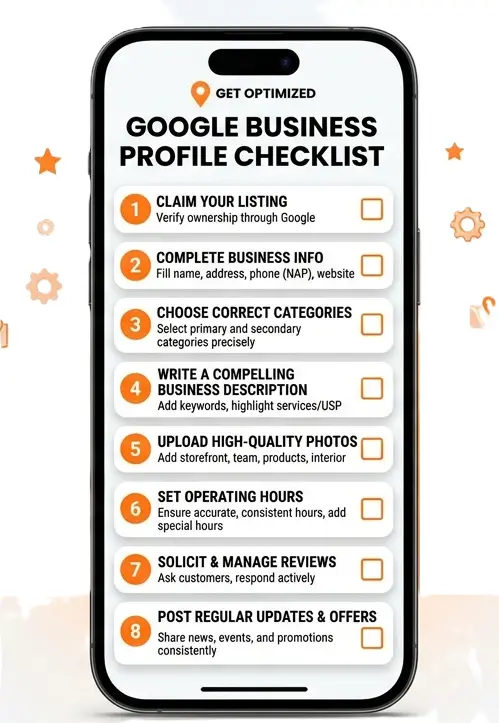
Local SEO may involve:
If your agency already provides website design or paid advertising to local businesses, SEO can become a natural recurring service to add.

National SEO Requires a Different Approach

Not every client is competing within one city.
If your clients sell nationally across the United States, their SEO strategy may focus on broader search visibility.
National SEO can involve:
  • National Keyword Research
  • Competitive Analysis
  • Technical SEO
  • Content Strategy
  • On-Page Optimization
  • Authority Building
  • Conversion Optimization
  • Performance Measurement
For an agency serving SaaS companies, e-commerce brands, B2B businesses, or national service companies, having access to national SEO expertise can expand the types of clients you can confidently serve.

How to Compare the Best White Label SEO Companies

If you’re comparing several providers, don’t start with price.
Start with the fulfillment model.
Ask what actually happens after you sign a client.
A good provider should be able to explain:
  • How a New Campaign Is Onboarded
  • How the Initial SEO Audit Is Performed
  • How Keywords Are Selected
  • How Competitors Are Analyzed
  • How the Strategy Is Created
  • Who Performs the Work
  • How Content Is Researched and Reviewed
  • How Technical Recommendations Are Handled
  • How Links Are Evaluated
  • How Performance Is Reported
  • How Revisions Are Handled
  • Who Communicates With Your Agency
  • How the Provider Handles an Increase in Client Volume
If the answers are vague, that’s worth investigating before you commit.

Don't Choose a Provider Based Only on Price

Pricing matters, especially for a small agency.

But the cheapest white label SEO company isn’t automatically the most profitable option.

Suppose a provider charges less but delivers work that requires significant editing, repeated revisions, client explanations, or additional project management.

Your actual cost is much higher than the monthly invoice.

When evaluating providers, consider:

Client revenue − fulfillment cost − management time = agency margin

That calculation gives you a much better picture of whether a partnership makes financial sense.

A slightly more expensive provider can potentially be the better option if the work requires less management and gives your agency greater confidence in what you’re delivering.

What Should White Label SEO Pricing Include?

There isn’t one standard price for white label SEO.
Pricing can depend on:
  • Website Size
  • Number of Target Locations
  • Industry Competition
  • Number of Keywords
  • Content Requirements
  • Technical Complexity
  • Link-Building Requirements
  • Reporting Requirements
  • Scope of Monthly Work
  • Level of Strategy and Account Support
When comparing packages, look beyond the headline price.
Ask:
  • What exactly am I getting every month?
  • For example, does the package include strategy?
  • Does it include technical SEO?
  • How much content is included?
  • Who performs keyword research?
  • Are reports branded?
  • How are backlinks handled?
  • Is there an account manager?
What happens when a client needs something outside the standard scope?
Those questions tell you far more than a package starting at a particular monthly price.

What Makes the Best White Label SEO Agency Different?

The best white label SEO agency for your business should fit the way your agency operates.
There are several characteristics worth prioritizing.

Agency experience

A provider working with agencies understands that you—not the fulfillment company—own the client relationship.

Transparent processes

You should know what is being done, when it is being done, and what you can expect to receive.

Quality control

SEO content, technical recommendations, and other deliverables should be reviewed before reaching your client.

Reliable communication

You shouldn’t have to chase your provider for updates every month.

Flexible fulfillment

Your clients should not all be forced into exactly the same SEO strategy.

Scalable capacity

The partner should be able to support you as your agency grows.

Clear reporting

You should receive reports that help you explain progress to your clients.

Realistic expectations

Be cautious of companies that guarantee specific Google rankings or promise instant results. A credible SEO partner should explain the variables involved in SEO and focus on measurable progress and business outcomes.

What Questions Should You Ask Before Choosing a White Label SEO Company?

Before signing an agreement, ask the provider some practical questions.

How do you onboard a new SEO client?

You want to understand what information they need and what happens during the first few weeks.

Who actually performs the SEO work?

Find out whether the work is handled internally, by contractors, or through another third party.

How do you develop an SEO strategy?

Ask them to explain their process rather than simply saying that every campaign is “custom.”

How do you approach content?

Ask who writes it, how topics are selected, how content is reviewed, and how it fits into the overall strategy.

How do you approach link building?

This is particularly important. Ask how links are sourced, evaluated, and monitored.

What will my agency receive each month?

Get clear on deliverables.

Can reports be branded?

If you are selling SEO under your agency’s brand, reporting should fit your client experience.

How do you communicate?

Understand the communication process before you have a time-sensitive client issue.

How do you handle revisions?

Find out what happens when your client requests changes.

Can you scale with my agency?

Ask what happens if your client count doubles.

White Label SEO vs. Hiring an In-House SEO Team

For a growing agency, the choice isn’t always obvious.
An in-house team gives you direct control, but it also brings recruitment, salaries, benefits, training, management, software costs, and employee retention into the equation.
Outsourcing gives you access to specialized resources without necessarily carrying the same fixed overhead.

Outsourcing can make sense when:

  • Your SEO client volume is still growing.
  • You don’t have enough work for several full-time specialists.
  • You want to launch SEO quickly.
  • You want to keep fixed costs under control.
  • Your team lacks technical SEO expertise.
  • You want to focus internal resources on sales and client relationships.

An in-house team may make more sense when:

  • SEO is a major part of your revenue.
  • You have predictable, substantial SEO demand.
  • You want complete internal control.
  • You have the resources to hire and manage specialists.
  • You want to build SEO as a core internal competency.
There is also a middle ground.
Some agencies keep strategy, client communication, and account management internally while outsourcing specialist fulfillment.
That hybrid approach can give a small agency more control without requiring a full SEO department.

White Label SEO vs. SEO Reseller Services

The terms “white label SEO” and “SEO reseller” are sometimes used interchangeably, but agencies should focus less on terminology and more on the actual partnership.
A reseller arrangement generally means you’re selling another company’s SEO services to your clients.
White label SEO places greater emphasis on delivering those services under your own agency’s brand.
When comparing providers, ask:
Will my agency remain in control of the client relationship and brand experience?
If the answer is yes, the arrangement may fit what you’re looking for.

How White Label SEO Can Help a Small Agency Grow

SEO can be more than another service on your website.
For a small agency, it can create opportunities to expand existing client relationships.
Imagine you already provide website design to a local business.
After the website launches, the client still needs:
  • Organic Traffic
  • Local Visibility
  • Content
  • Search Optimization
  • Ongoing Website Improvements
Instead of treating the website project as the end of the relationship, SEO can become a recurring service.
The same applies to agencies providing PPC, social media, branding, or other digital marketing services.
Your existing clients may already trust you.
Adding SEO gives you another opportunity to provide ongoing value.

How Do You Know If a White Label SEO Partner Is the Right Fit?

The right provider should make your agency’s life easier—not create another layer of work.
Before making a decision, consider five things:
  1. Can they deliver the services your clients actually need?
  2. Can you understand and explain their process to your clients?
  3. Is the quality good enough to put your agency’s name behind it?
  4. Can the partnership work financially for both you and your client?
  5. Can the provider support you when your agency grows?
If the answer to all five is yes, you may have found a strong candidate.

Why Agencies Consider Hotbit Digital for SEO

Hotbit Digital provides SEO and digital marketing services for businesses that need help improving their online visibility.
Its SEO capabilities cover areas including SEO audits, technical optimization, on-page SEO, content strategy, local SEO, national SEO, and related digital marketing services.
For agencies looking for an SEO fulfillment partner, this broader service capability can be useful because different clients often require different combinations of SEO services.
A local business may need local SEO and content.
An e-commerce business may require technical SEO, category-page optimization, and content.
A national company may need broader keyword research, content strategy, technical optimization, and authority building.
Rather than forcing every client into the same campaign, the better approach is to match the SEO strategy to the business.

Hotbit also publishes client testimonials and case-study information that agencies can review when evaluating its experience and approach.

As with any SEO provider, prospective agency partners should evaluate the actual fit based on their client mix, required services, budget, communication expectations, and fulfillment requirements.
Ready to Scale Your SEO Services? Talk to Hotbit Digital About White Label SEO

Frequently Asked Questions About AI Visibility Services

What is white label SEO?

White label SEO is an outsourcing model where an SEO provider performs SEO work for your agency while your agency delivers the service to its clients under its own brand.

Is white label SEO a good option for small agencies?

It can be. Small agencies often use white label SEO when they want to offer SEO services without immediately hiring and managing a complete internal SEO team.

What are the best white label SEO services for agencies?

The most useful services typically include SEO strategy, keyword research, technical SEO, on-page optimization, content strategy, SEO content, local SEO, national SEO, link-building strategy, SEO audits, and reporting.
The right combination depends on the clients your agency serves.

How do I find the best white label SEO company?

Compare providers based on their SEO methodology, quality control, communication, reporting, fulfillment process, pricing, scalability, and experience with agencies.
Don’t make the decision based only on package price.

What should I look for in the best white label SEO agency?

Look for a provider with a clear fulfillment process, experienced SEO specialists, transparent deliverables, reliable communication, quality control, flexible strategies, and the ability to scale with your agency.

How much does white label SEO cost?

White label SEO pricing varies based on factors such as website size, competition, content requirements, target locations, technical complexity, link-building needs, and the scope of monthly services.

Can I sell SEO services under my agency's brand?

Yes. White label SEO is designed to allow an agency to maintain its own brand and client relationship while outsourcing fulfillment to an SEO provider.
Is white label SEO profitable?

It can be, provided the agency’s client pricing leaves enough margin after fulfillment costs and internal account-management time.

Is white label SEO better than hiring an SEO employee?

There is no universal answer. Outsourcing can be more flexible for small agencies with variable demand, while an internal team can make sense when SEO becomes a large and predictable part of the business.

Can a web design agency use white label SEO?

Yes. Web design agencies often use SEO as an ongoing service after website projects are completed.

Can a PPC or digital advertising agency outsource SEO?

Yes. SEO can complement PPC and other digital marketing services, allowing an agency to offer clients a broader acquisition strategy.

How long does SEO take to produce results?

There is no universal timeline. Results depend on the website’s starting condition, competition, industry, content quality, technical health, authority, implementation speed, and other factors.
A responsible SEO provider should avoid guaranteeing a specific ranking or timeline.

What should I ask a white-label SEO company before hiring them?

Ask about their onboarding process, SEO strategy, keyword research, content process, technical SEO capabilities, link-building practices, reporting, communication, revisions, pricing, contracts, and ability to scale.

Choosing a White Label SEO Partner for Your Agency

The right white label SEO partner isn’t necessarily the company that promises the fastest rankings or the cheapest monthly package.
For a small U.S. agency, the better partner is one that understands how agencies actually operate.
You need a provider that can deliver quality SEO work, communicate consistently, adapt campaigns to different clients, provide clear reporting, and scale as your agency grows.
Most importantly, you need to be comfortable putting your agency’s reputation behind the work.
If you’re currently selling SEO—or considering adding it to your agency’s service offering—Hotbit Digital can help you explore whether its SEO capabilities fit your fulfillment needs.
Start by looking at your current client base, the SEO services they need, your available internal resources, and the margin you want to maintain.
From there, you can determine whether a white-label SEO partnership makes sense for your agency.

Categories

Related Posts

No tags found.