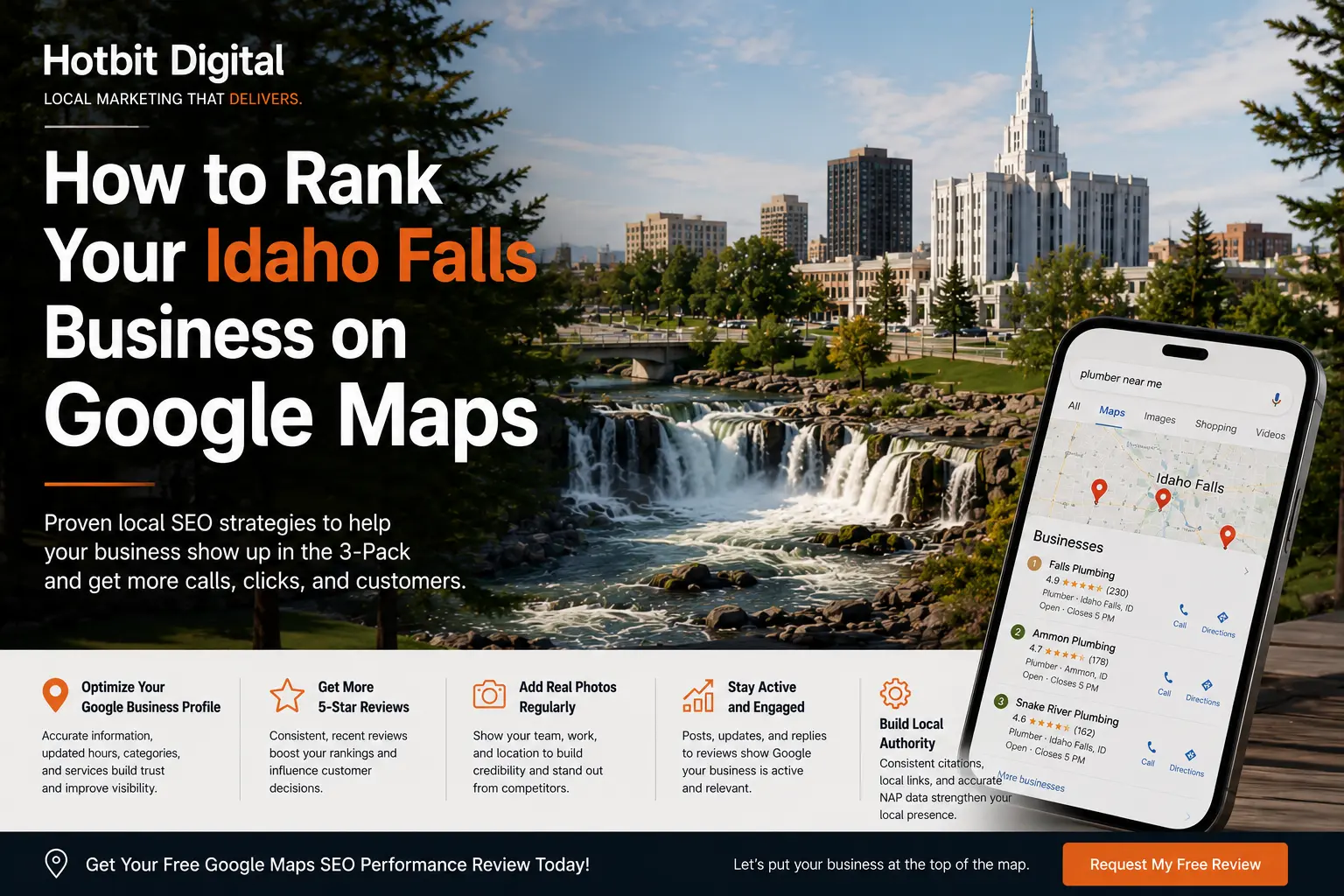
When an Idaho Falls resident experiences a midnight plumbing emergency in Ammon, or a tourist wandering the Snake River Greenbelt hunts for a highly rated steakhouse, they do not pull up a traditional list of web text links. They open their phones and use a map.
The three businesses featured alongside that map—frequently called the Google Map 3-Pack—intercept the vast majority of local phone calls, website clicks, and direct foot traffic. If your company isn’t appearing in that premium real estate, your digital presence is essentially invisible to highly motivated, regional consumers.
Dominating this space requires a dedicated framework called Google Maps SEO. This process has nothing to do with random luck. Instead, it relies on feeding Google’s local algorithm the precise, real-world context it demands.
The local ecosystem undergoes frequent algorithmic updates. If you want to know how to rank higher on 3-Pack Maps and maintain a competitive edge, this modern strategy guide outlines exactly how to rank higher on Google Maps.
The Core Foundations of Google Maps Ranking
To build an optimized listing, you must understand the underlying rules. The algorithm weighs three foundational inputs to establish map placement:
- Proximity: The physical distance between your business location and the user making the query.
- Relevance: How accurately your business parameters, operational fields, and web details mirror the specific search intent.
- Prominence: The online reputation, credibility, and overall digital weight of your entity across the web, evaluated via review signals and local backlinks.
While you cannot alter your physical coordinates to manipulate proximity, you have complete control over maximizing your relevance and prominence through structured Google Maps SEO optimization.
Actionable Roadmap to Rank Higher in the Local 3-Pack
1. Lock Down the “Openness” and Accuracy Baseline
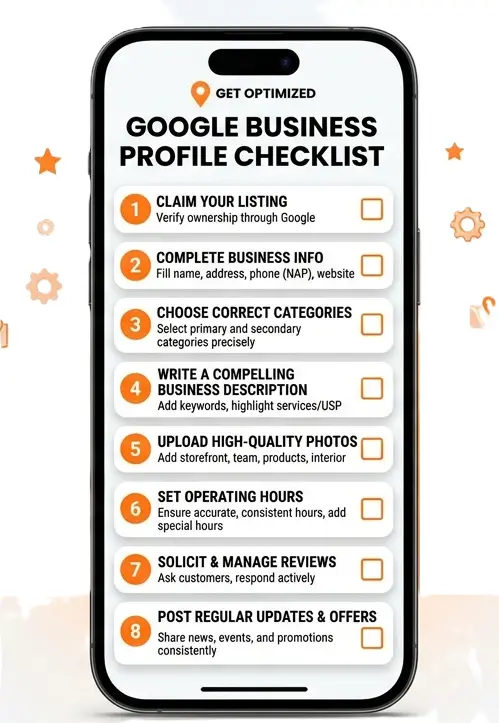
- The “Open at Time of Search” Priority: Google actively prioritizes active operational status. If a user searches for an open service provider, businesses that are currently open in real-time will rank dramatically higher than closed entities. Keep your holiday hours and daily schedules updated down to the exact minute.
- Enforce Exact Legal Names: The algorithm aggressively flags artificial keyword loading. Use your precise, real-world business name across your profile. Adding phrases like “Best Idaho Falls Painter” when your legal name is simply “Falls Painting” risks immediate profile suspension.
2. Establish a Dynamic, High-Velocity Review System
Reviews are heavily weighted signals for map prominence. However, the modern algorithm values context and regular activity over a static high score.
- Review Recency Matters: A business with a high volume of reviews received steadily over time will easily outrank a profile with a few historical 5-star ratings. Establish a process to invite reviews within 24 to 48 hours of completing a job.
- Keep Inquiries Honest and Clean: Compliance rules heavily restrict forced review copy. Never incentivize reviews with discounts, and never pressure clients to use specific text phrases or name explicit staff members. Simply make the process easy by using short follow-up text messages or email QR codes.
- Write Helpful, Contextual Replies: Reply to 100% of your incoming reviews. Use your replies to naturally reference your specific services and locations to build implicit search context for the algorithm.
3. Feed the Visual Engine with Raw, Authentic Imagery
Stock imagery fails the modern algorithmic trust test and can actively lower your visibility.
- The 100+ Photo Threshold: Industry data shows that businesses maintaining over 100 real-world images on their profile secure significantly more inbound interactions and direction requests than competitors.
- Ditch Filters and Overlays: Upload completely raw, unfiltered photos of your physical storefront, labeled fleet trucks, or active local jobsites. Avoid graphic designs with text overlays, as Google’s vision AI favors authentic, real-world pictures.
4. Align Categories and Hardcode Predefined Services
If your category architecture is weak, the search engine cannot accurately classify your business entity.
- Select Your Single Core Focus: Set your primary category to match your specific trade (e.g., choosing “Family Law Attorney” rather than a broad, generic classification like “Lawyer”).
- Maximize Predefined Services: Take full advantage of the internal “Services” tab. Opt into Google’s predefined service lists and populate them with clear descriptions. The algorithm relies heavily on these specific data fields to pull your entity into relevant local map results.
Advanced Strategy: Structuring Web Data for AI Visibility
Modern local search extends beyond standard map pins. With the rise of AI-driven tools, your entire online footprint must validate your map position.
- Deploy LocalBusiness Schema Markup: Inject advanced JSON-LD structured code directly onto your website’s contact and service pages. This provides clear geographic data fields (like your exact latitude, longitude, and phone routing) that search bots read instantly.
- Enforce Uniform NAP Formatting: Ensure your Name, Address, and Phone number are formatted identically across every directory. Discrepancies like using “Ste. 100” on one profile and “Suite 100” on another create conflicting signals that can drop your prominence score.
- Target “Best of” Directories: High-authority, curated lists published by regional chambers of commerce, news outlets, and neighborhood blogs act as top-tier trust signals that earn citations in local AI summaries.
Conclusion: Capture Your Position in the 3-Pack
Learning how to improve Google My Business ranking positions isn’t a one-time configuration task. It is a continuous process of maintaining accurate data, keeping your profile active, and proving real-world local presence. By systematically tightening your operational data, executing an automated review process, and deploying structured schema markup, you build an organic asset that intercepts customers right when they are ready to purchase.
If you are a local business owner focused on daily operations and want an experienced team to handle the technical complexities of map positioning and citation auditing, partnering with a specialized idaho falls seo company streamlines the path to growth.
At Hotbit Digital, we build high-performing, transparent optimization campaigns tailored to your target geographic markets. We handle your structural data, clean up your citation profiles, and maximize your visibility across the modern search landscape.
Stop letting your competitors claim the top spots on the map. Reach out to our team today for a transparent, data-driven local search audit, and let’s secure your business at the top of the Idaho Falls market.
Frequently Asked Questions (FAQ):
Q: How long does it typically take to see ranking improvements on Google Maps?
While basic profile adjustments can reflect in search systems within 48 hours, achieving a dominant, sustainable position in a competitive local market generally takes between 3 to 6 months of consistent data updates and review velocity.
Q: Can I expand my map ranking radius by simply adding more cities to my service areas?
No. Adjusting your service area settings inside your dashboard defines your service boundaries for users, but it does not expand the physical radius of your algorithmic proximity score. To rank across broader regions, you must build deeper organic prominence through localized landing pages and reviews.
Q: Why did my map listing suddenly lose visibility or drop in rankings?
Abrupt ranking drops are typically caused by four common factors: a sudden influx of unverified information or unapproved user edits, major discrepancies in your third-party directory listings, a prolonged period of profile inactivity, or your business showing as closed during a user’s live search window.