Healthcare marketing helps doctors, clinics, hospitals, and other healthcare providers connect with patients through online search, helpful content, digital advertising, and other marketing channels. For medical practices in Houston, effective healthcare marketing can improve online visibility, build patient trust, and make it easier for people to find relevant services and request appointments.
A healthcare marketing agency in Houston can help medical practices develop a digital marketing strategy that includes search engine optimization (SEO), local SEO, content marketing, paid advertising, and website optimization. These services help healthcare providers reach relevant audiences and create a clearer path from online searches to appointment inquiries.
In this guide, you’ll learn how healthcare marketing works, which strategies can improve patient engagement, how to evaluate a Houston healthcare marketing agency, and which metrics can help measure marketing performance.
What Is Healthcare Marketing?
Healthcare marketing is the process of promoting healthcare services and helping patients find the information they need to choose a provider. It includes online and offline activities that help hospitals, clinics, doctors, and other healthcare organizations connect with their target audience.
Digital healthcare marketing focuses on channels such as search engines, websites, social media, email, and online advertising.
For example, a medical clinic in Houston may use local SEO to appear in relevant searches, publish helpful articles to answer patient questions, and improve its website so visitors can easily request an appointment.
The main goal is not simply to get more website visitors. It is to connect the right people with relevant healthcare information and make it easier for them to take the next step.
Why Is Healthcare Marketing Important for Medical Practices in Houston?
Houston has a large healthcare market with hospitals, private practices, specialty clinics, dental offices, and many other healthcare providers. Patients may have several options when looking for care, so a strong online presence can help a practice stand out.
Here are some important reasons to invest in healthcare marketing.
1. Help Patients Find Your Practice Online
Many people use search engines to find doctors, clinics, and healthcare services near them. If your website does not appear for relevant searches, potential patients may discover another provider first.
Search engine optimization (SEO), local SEO, and helpful website content can improve your chances of appearing when people search for services you offer.
2. Build Trust Before the First Appointment
Choosing a healthcare provider is a personal decision. Patients often want to understand a provider’s qualifications, services, location, and approach to care before making contact.
A clear website, accurate service information, professional content, and honest patient reviews can help people make informed decisions.
3. Make Appointment Requests Easier
A visitor may leave your website if they cannot find your phone number, office hours, location, or appointment instructions.
A simple website with clear calls to action can make it easier for visitors to contact your practice or request an appointment.
4. Stay Connected With Existing Patients
Marketing is not only about attracting new patients. Helpful reminders, educational newsletters, and updates about services can support ongoing communication with existing patients when used with appropriate consent and privacy safeguards.
5. Understand Which Marketing Activities Work
Marketing analytics can help practices understand how people discover their websites and which pages encourage visitors to take action.
Tracking relevant measures can help a practice make better decisions about its marketing budget and future campaigns.
8 Healthcare Marketing Strategies to Increase Patient Engagement
A strong healthcare marketing plan combines several activities. The right mix depends on the type of practice, its goals, its audience, and its budget.
1. Improve Your Healthcare Website
Your website is often one of the first places people visit when researching a healthcare provider. It should answer common questions and make the next step clear.
A useful medical website should include:
- Clear information about your services and specialties.
- Provider biographies and verified professional credentials.
- Office address, phone number, and opening hours.
- Easy-to-use contact and appointment request options.
- Helpful answers to common patient questions.
- A mobile-friendly design that loads quickly.
- Clear privacy information and secure forms where needed.
Example: A Houston dermatology clinic can create separate pages for its main services. Each page can explain what the service involves, who may benefit from it, and how visitors can contact the clinic for more information.
A well-organized website helps patients find relevant information without searching through multiple pages.
2. Use Local SEO to Reach People in Houston
Local SEO helps a business appear in search results related to its location. For healthcare practices, it can help people discover relevant providers in Houston and nearby service areas.
A local SEO strategy can include:
- Using accurate business details across online directories.
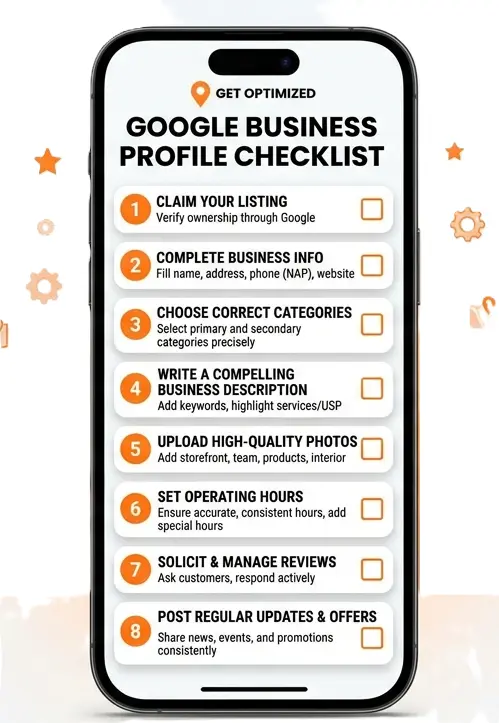
- Maintaining an up-to-date Google Business Profile.
- Creating useful pages for actual services and locations.
- Adding relevant location information to website content.
- Earning genuine reviews and responding professionally.
- Making sure contact details are consistent across the web.
A healthcare provider should use location terms naturally rather than repeat the city name throughout every paragraph.
For example, a practice serving patients in Houston can explain its location, the communities it serves, and the services available at that office.
For a business seeking professional support, a healthcare marketing agency in Houston or a digital marketing partner with relevant local SEO experience may help develop and manage this strategy.
3. Create Helpful Healthcare Content
Patients often have questions before they contact a provider. Useful content can help answer those questions and introduce people to the services a practice offers.
Healthcare content may include:
- Blog articles that answer common questions.
- Service pages explaining available treatments.
- Provider biographies and qualifications.
- Frequently asked questions.
- General patient education resources.
- Videos explaining what to expect during a visit.
For example, a physical therapy clinic could publish an article about what patients can expect during their first appointment.
The content should be accurate, easy to understand, and reviewed by a qualified healthcare professional when it includes clinical information. Avoid making unsupported claims about treatment outcomes or promising specific medical results.
Helpful content can support SEO while giving readers a reason to trust the information on your website.
4. Use Paid Advertising to Reach Relevant Audiences
Search advertising can help healthcare providers reach people who are actively looking for particular services.
For example, a clinic may run a Google Ads campaign for a service it offers in its actual service area. The advertisement can direct visitors to a relevant landing page with service details and clear contact information.
To make paid campaigns more useful:
- Choose keywords related to the services offered.
- Match each advertisement to a relevant landing page.
- Set a budget based on business goals and available resources.
- Track qualified inquiries rather than clicks alone.
- Review advertising policies and healthcare privacy requirements.
Paid advertising can generate visibility more quickly than SEO, but results depend on competition, budget, landing page quality, and campaign management. It does not guarantee new patients.
5. Build a Useful Social Media Presence
Social media gives healthcare providers another way to share information and stay visible to their communities.
Useful content ideas include:
- Introductions to doctors and staff.
- General health education reviewed by qualified professionals.
- Updates about office hours and services.
- Answers to common questions.
- Community health events.
- Videos explaining how to prepare for a visit.
The goal should be to provide useful information and build trust, not simply publish promotional posts every day.
Healthcare providers should also avoid sharing identifiable patient information, photos, testimonials, or stories without the appropriate permission and safeguards.
6. Manage Your Online Reputation
Online reviews can influence how people evaluate a healthcare practice. A professional approach to online reputation management helps practices understand patient feedback and improve communication.
Healthcare providers can:
- Make it easy for patients to leave honest feedback.
- Respond politely and professionally to reviews.
- Address concerns through appropriate private channels.
- Monitor reviews across relevant platforms.
- Avoid fake reviews or incentives that violate applicable rules.
- Train staff to handle complaints with care.
Never confirm that a reviewer is a patient or reveal private medical details in a public response.
A strong reputation comes from real patient experiences, good communication, and consistent service—not from attempting to control every review.
7. Use Email Marketing to Support Patient Communication
Email marketing can help healthcare organizations share useful updates with people who have chosen to receive them.
Possible email topics include:
- Practice news and service updates.
- General health education.
- Changes to office hours.
- Community event announcements.
- Appointment reminders through appropriate systems.
- Follow-up information approved by the practice.
Emails should have a clear purpose and provide an easy way to manage communication preferences.
Healthcare providers must also consider applicable privacy rules, consent requirements, and the type of information included in each message. Sensitive medical details should not be sent through ordinary marketing emails without an appropriate, secure process.
8. Track Results and Improve Your Strategy
Healthcare marketing should be measured against clear goals. Website traffic alone does not show whether a campaign is helping a practice.
Useful metrics include:
Metric | What it helps you understand |
Organic search traffic | How people discover your website through search engines |
Local search visibility | How often your practice appears for relevant local searches |
Qualified inquiries | How many relevant people contact your practice |
Appointment requests | How many visitors take the intended next step |
Landing page conversion rate | How often visitors complete a desired action |
Cost per qualified lead | How much you spend to generate a qualified inquiry |
Campaign return on investment | Whether the measurable financial return justifies the cost |
Set a baseline before making major changes. Review performance regularly and use the results to improve website pages, advertising, and content.
For healthcare organizations, analytics and advertising tools should also be reviewed for privacy and compliance risks. Tracking systems must be configured appropriately for the information they collect and share.
How Can a Healthcare Marketing Agency in Houston Help Your Practice?
A healthcare marketing agency helps plan, manage, and improve marketing activities. Depending on its experience and services, an agency may support a practice with SEO, paid advertising, website design, content marketing, and social media.
Here are some ways a marketing partner may help.
Create a Marketing Plan Around Your Goals
The agency should first understand the practice, its services, its audience, its competitors, and its current marketing performance.
This helps establish priorities instead of spending money on channels without a clear purpose.
Improve Search Visibility
SEO and local SEO can help healthcare providers make their websites easier to discover. This may include technical website improvements, keyword research, service page optimization, and useful educational content.
Improve the Website Experience
A marketing partner can review how visitors use the website and identify issues such as confusing navigation, missing service information, slow pages, or unclear contact options.
Connect Marketing Channels
SEO, content, paid advertising, and website improvements can support one another. For example, a useful service page can support both organic search and a relevant paid campaign.
Report on Meaningful Results
A good reporting process explains what was done, what changed, and which actions should come next. It should connect marketing activity to business goals wherever the data allows.
When comparing a Houston healthcare marketing agency with a general digital marketing company, ask about relevant healthcare experience, reporting methods, privacy safeguards, and how the agency measures success.
Hotbit Digital offers digital marketing services that include SEO, local SEO, PPC, content marketing, social media marketing, and website design. Healthcare providers considering these services can discuss their goals and requirements with the team to determine whether the available services fit their needs.
How to Choose the Right Healthcare Marketing Agency in Houston
Choosing a marketing partner requires more than comparing prices or promises. Use the following checklist to guide your decision.
1. Check Relevant Experience
Ask whether the agency has worked with healthcare organizations or businesses with similar marketing needs.
Review relevant examples and case studies, and confirm that any reported results are supported by evidence.
2. Understand the Services Included
Some agencies focus on SEO, while others offer a wider range of services. Choose a partner whose capabilities match your goals.
Ask whether the proposed plan includes strategy, implementation, reporting, and ongoing improvements.
3. Ask How Success Will Be Measured
Agree on the outcomes that matter before the campaign begins.
Depending on your goals, these may include qualified inquiries, appointment requests, local visibility, or cost per lead.
Be cautious of guaranteed rankings or promises of a fixed number of patients without a clear, credible basis.
4. Review Communication and Reporting
You should know who manages your account, how often you will receive updates, and how campaign decisions are made.
Reports should explain results in simple language rather than relying only on technical terms.
5. Discuss Privacy and Compliance
Healthcare marketing may involve sensitive information. Ask how the agency handles website forms, analytics, advertising platforms, patient reviews, and access to marketing accounts.
The practice and its marketing partners should understand their respective responsibilities under applicable privacy and advertising rules.
6. Understand the Pricing
Request a clear proposal that explains the services, expected deliverables, advertising spend, contract terms, and any additional fees.
The lowest price is not always the best value. Focus on whether the proposed work fits your goals and budget.
How Much Does Healthcare Marketing Cost in Houston?
The cost of healthcare marketing in Houston varies based on the services needed, the size of the practice, local competition, campaign goals, and the amount of work involved.
For example, a small practice that needs local SEO may have different requirements from a hospital group that needs several websites, paid advertising campaigns, and ongoing content production.
Common cost factors include:
- Website design and development.
- SEO and local SEO.
- Paid advertising management and media spend.
- Content writing and production.
- Social media management.
- Reputation management.
- Analytics and reporting.
- The number of services and locations covered.
When comparing proposals, ask agencies to separate service fees from advertising spend and one-time project costs. Request a clear list of deliverables and agree on how results will be reviewed.
Rather than choosing an agency based on price alone, look for a plan that matches your business needs and has a clear way to measure progress.
Common Healthcare Marketing Mistakes to Avoid
Even a well-funded marketing campaign can struggle when the basics are overlooked.
Avoid these common mistakes:
- Ignoring local SEO: Your practice may miss relevant local searches if its location and business information are incomplete.
- Using a confusing website: Visitors may leave if they cannot find services or contact information.
- Publishing unhelpful content: Articles written only to include keywords may not answer real patient questions.
- Focusing only on traffic: More visitors do not automatically mean more qualified inquiries.
- Making unsupported claims: Healthcare advertising should be accurate and should not promise guaranteed outcomes.
- Ignoring patient privacy: Marketing systems and communication processes need appropriate privacy safeguards.
- Failing to measure results: Without clear metrics, it is difficult to know which activities are worth improving.
- Expecting instant SEO results: Organic search visibility usually requires ongoing work and can change with competition and search engine updates.
14. Create Helpful Christmas Content for Search and AI Answers
Content marketing can help your dispensary answer common customer questions and attract relevant organic traffic.
- Christmas gift ideas for people who have everything
- Affordable holiday gifts under $25
- Best Christmas gifts for coworkers
- Sustainable Christmas gift ideas
- Last-minute Christmas gifts available for local pickup
- How to choose a thoughtful gift for a small-business owner
- Christmas gift bundles for families
- Holiday marketing ideas for small businesses
A consistent strategy, clear communication, and regular performance reviews can help practices make better marketing decisions over time.
Frequently Asked Questions About Healthcare Marketing in Houston
What does a healthcare marketing agency in Houston do?
A healthcare marketing agency helps healthcare providers promote their services and reach relevant audiences. Depending on its capabilities, it may provide SEO, local SEO, paid advertising, website design, content marketing, social media management, and performance reporting.
Why is healthcare marketing important for medical practices?
Healthcare marketing helps people discover a practice, learn about its services, and understand how to make contact. It can also help providers build an online presence, communicate with their audience, and measure how well their marketing efforts support business goals.
How can a Houston healthcare marketing agency increase patient engagement?
A marketing agency can improve patient engagement by creating helpful website content, making service information easier to find, improving local search visibility, simplifying contact options, and supporting relevant communication campaigns. Results depend on the practice, its audience, and the quality of implementation.
Is SEO useful for healthcare providers in Houston?
Yes. SEO can help healthcare providers improve their visibility in relevant search results. Local SEO is particularly useful for practices that serve specific geographic areas. Results depend on competition, website quality, content, and ongoing optimization.
Should a medical practice invest in SEO or paid advertising?
The right choice depends on the practice’s goals, timeline, and budget. SEO supports long-term organic visibility, while paid advertising can provide visibility for selected searches while a campaign is active. Some practices use both to reach different goals.
How long does healthcare SEO take to show results?
There is no fixed timeline. SEO results depend on the website’s current condition, competition, content quality, technical issues, and the work being completed. Practices should monitor progress over time instead of expecting guaranteed rankings within a set number of days.
What should I look for in a healthcare marketing agency?
Look for relevant experience, clear service offerings, transparent reporting, realistic goals, good communication, and an understanding of healthcare privacy and advertising requirements. Ask for evidence to support case studies and performance claims.
How can healthcare providers measure marketing success?
Providers can track relevant measures such as organic search traffic, local visibility, qualified inquiries, appointment requests, conversion rates, and cost per qualified lead. The metrics should match the practice’s goals and be measured in a privacy-conscious way.
Is healthcare digital marketing different from general digital marketing?
Healthcare marketing has additional considerations because patients need accurate information and may share sensitive information when seeking care. Marketing campaigns should account for patient trust, clinical accuracy, privacy, and applicable healthcare advertising rules.
Can a digital marketing agency help a healthcare business improve its online presence?
A digital marketing agency with the right capabilities can help improve a healthcare business’s website, search visibility, content, advertising, and reporting. Before hiring an agency, confirm that its services and experience match your specific requirements.
Final Thoughts
Healthcare marketing in Houston is about helping people find reliable information and making it easier for them to connect with the right provider. A clear website, strong local SEO, helpful content, relevant advertising, and thoughtful patient communication can all contribute to a better online experience.
The best approach starts with understanding your audience, setting measurable goals, and choosing marketing activities that fit your practice. Regular reviews help you identify what is working and where improvements are needed.
If you are exploring digital marketing support for your healthcare business, Hotbit Digital offers SEO, local SEO, PPC, content marketing, social media marketing, and website design services. Contact the team to discuss your goals and determine which services may be suitable for your needs.
Ready to improve your online marketing strategy? Visit Hotbit Digital to learn more about its digital marketing services.