Every single day, hundreds of high-intent consumers across Bonneville County pull out their smartphones to find local services. They are searching for everything from emergency plumbing in Ammon to trusted accounting firms in downtown Idaho Falls. Yet, while local search volume remains incredibly high, many business owners look at their phones and wonder why the incoming stream of customer inquiries has slowed to a crawl.
When your phone isn’t ringing, it is easy to assume that the local market has dried up or that seasonal shifts are to blame. However, the root issue is rarely a lack of consumer demand. Instead, the culprit is almost always hidden lead generation problems embedded within your online presence. Many business owners unintentionally make common small business online marketing mistakes that silently break user trust and fail to satisfy search engine ranking parameters.
To understand how to get more leads online, you must look closely at your digital strategy from the perspective of both your customer and the algorithm. Here are the top five reasons why Idaho Falls businesses fail to capture local buyers and how to course-correct before your competitors secure the market.
1. The Ghost Town Presence (Neglected Google Business Profiles)
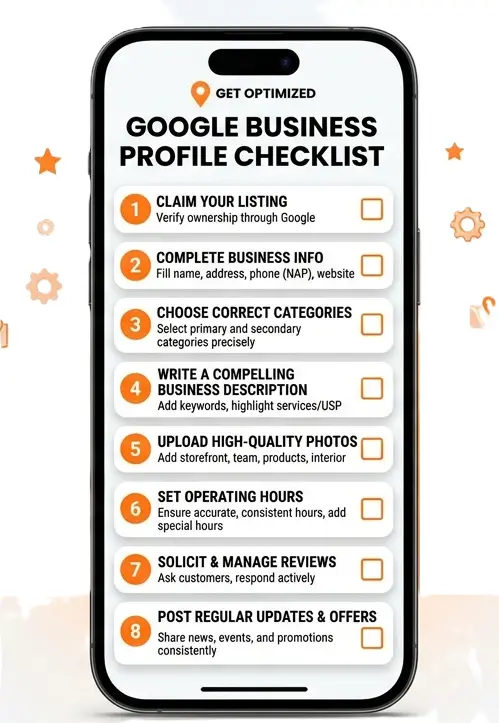
Your Google Business Profile is often the first impression potential customers have of your business. One of the most common small business marketing mistakes in East Idaho is neglecting this critical local marketing asset. An incomplete or outdated profile can cause local searchers to choose a competitor before ever visiting your website. That’s why we’ve created a comprehensive Google Business Profile Checklist to help you optimize every key element of your listing, improve visibility in local search results, and turn more profile views into calls, website visits, and customers.
- Algorithmic Stagnation: Search engines prioritize active, highly operational entities. When your profile sits for months without new content, photos, or updates, your profile’s authority drops, burying you beneath competitors in the Map Pack.
- Consumer Detour: If an Idaho Falls resident encounters an unverified schedule, an incorrect address, or zero real-world imagery, they assume your company is either permanently closed or unreliable.
- The Correction: Treat your business profile as an active, daily marketing asset. Frequently publish brief updates regarding your current services, seasonal announcements, or local discounts. Routinely upload crisp, high-contrast photos of your actual team working on-site in local neighborhoods to inject human authenticity into your profile.
2. Fractured Digital Citations (The NAP Inconsistency Trap)
Search engines evaluate your company’s credibility based on how consistent your business details are across the web. To verify that your business is a legitimate local entity, search engines cross-reference your Name, Address, and Phone number (NAP) on third-party websites.
- Divided Trust Signals: If your information is formatted as “123 Woodbury Ave” on your website but listed as “123 Woodbury Avenue” on directory sites, or if an old phone number is left on an outdated Facebook profile, it creates an algorithmic roadblock.
- Rank Devaluation: These minor discrepancies cause a common reason why small businesses lose leads: search engine crawlers cannot confidently verify your location data. Consequently, your prominence score falls, and you lose your spot in the coveted Google Map 3-Pack.
- The Correction: Execute an exhaustive online data sweep. Audit every platform—from major spaces like Yelp, the Better Business Bureau (BBB), and Apple Maps to local directories like the Greater Idaho Falls Chamber of Commerce. Force every directory to match your website’s exact NAP formatting down to the individual punctuation marks.
3. The Diluted Entity Error (Broad and Generic Categorization)
When configuring business registries, websites, and map profiles, many entrepreneurs choose broad, catch-all service descriptions to avoid leaving anyone out. Ironically, trying to target everyone means you end up indexing for no one.
- The Mismatched Context: Local search algorithms are designed around granular search intent. If a specialized technician registers their primary industry category simply as “Contractor”, they are competing in an overwhelmingly massive pool.
- Lost High-Intent Traffic: When a homeowner in Ammon types a laser-focused query for a “tankless water heater repair technician near me”, the search engine will skip right past the generic contractor. It will reward the local specialist who has clearly structured their data to match that exact phrase.
- The Correction: Audit your core categories across your primary digital channels. Transition away from generic classifications and select the most specific primary category available that represents your core revenue driver (e.g., “HVAC Contractor” or “Kitchen Remodeling Contractor”). Populate your listing with specific secondary categories to cleanly map out your secondary service lines.
4. Communication Leaks & Disregarded Customer Feedback
Generating visibility is only half the battle; the moment a customer reaches out or leaves a public review, your operations are put on display. Poor communication habits represent a massive common small business online marketing mistakes category that directly tanks sales numbers.
- The Speed-to-Lead Problem: Modern buyers expect rapid responses. If an interested lead fills out your online estimate form and sits for 24 to 48 hours without a reply, they won’t wait around—they will click right back to the search page and call the next business in line.
- Review Stagnation: Allowing your public reviews to sit completely unanswered tells prospective clients that your customer service ends the moment a transaction is complete. Furthermore, a total lack of fresh review velocity tells the algorithm that your business lacks active local momentum.
- The Correction: Systematize your follow-up pipeline. Implement automated SMS or email review tools that gently text a direct review link to clients immediately after a service technician completes a job. Build a strict daily operational habit of replying to 100% of your incoming reviews within 48 hours, using professional language that naturally emphasizes your service keywords.
5. Homepage Bottlenecks (Lack of Focused Service & Location Pages)
A poorly structured website architecture is a quiet lead-killer. Forcing all of your online traffic onto a single, over-crowded homepage introduces major friction to the user experience.
- Geographic Dilution: If your physical shop sits in Idaho Falls, but your actual service area encompasses Ammon, Shelley, Rigby, and Blackfoot, a single homepage cannot properly signal deep local relevance for all of those independent search zones.
- Conversion Drop-Off: When a user arrives at your site looking for a very specific problem (like commercial flat roof repair) but is hit with a wall of generic text covering every service you offer, they lose interest. If they have to dig around your menus just to find a simple contact form, they will bounce off your site entirely.
- The Correction: Build out a clean, intuitive site hierarchy by launching dedicated, highly independent service pages for every major specialty you offer. Additionally, construct localized city landing pages for your core target markets. Write completely unique, contextual, and valuable content for each individual landing page instead of repeating the same copied text templates.
Technical Optimization Checklist for Small Business Websites
To turn your website into a high-converting customer magnet, ensure your technical elements are fully optimized for mobile behavior:
- Hardcode “Click-to-Call” Connectivity: Ensure every phone number element across your mobile site uses an active, tap-friendly tel: link so users can dial your office instantly without copy-pasting numbers.
- Optimize for Zero-Click Visibility: Fill out the absolute maximum amount of attributes, menus, and booking options directly within your Google profile. This allows users who run “zero-click searches” to find answers and take action right from the search engine results page.
- Enforce Ironclad Security (HTTPS): Verify your SSL certificate is functioning across every page to prevent browsers from displaying alarming “Site Not Secure” warnings to potential leads.
Turn Local Searches Into Inbound Revenue
Overcoming persistent lead generation problems doesn’t require a massive marketing budget or corporate infrastructure. It requires structural discipline, attention to data accuracy, and a clear understanding of local search signals. By systematically cleaning up your web formatting, mapping out your service hierarchy, and engaging cleanly with your local community, you can build a reliable digital asset that consistently feeds your business with high-value, inbound customers.
If you are a business owner focused on running daily operations and want an experienced team to handle the technical complexities of local market positioning, professional SEO services Idaho Falls can simplify the process.
At Hotbit Digital, we don’t deal in surface-level aesthetics or empty marketing buzzwords. We build custom, data-verified local SEO campaigns, citation frameworks, and conversion-centered design strategies built specifically to outperform your regional competitors and hit your direct financial goals.
Stop letting premium local inquiries slip away to the business down the street. Reach out to our specialized local team today to secure a clear, no-obligation search engine audit, and let’s turn your web presence into an organic lead machine.
👉 Get Your Free Idaho Falls Local SEO Performance Audit Today!
Frequently Asked Questions
Q1: Why is my Idaho Falls business website getting traffic but no leads?
A: This is a classic indicator of a conversion bottleneck. If users are finding your site but leaving without calling or filling out a form, you likely have hidden technical or behavioral “leaks.” Common culprits include slow mobile loading speeds, a lack of clear click-to-call buttons, or forcing users to navigate a cluttered homepage instead of a dedicated service landing page. Traffic gets them to your door, but user experience (UX) gets them to buy.
Q2: What is the most common reason why small businesses lose leads to local competitors?
A: Neglecting or abandoning your Google Business Profile is a primary reason why small businesses lose leads. Many owners create a profile and forget about it. If your competitors are consistently posting fresh photos, responding to reviews, and updating their business attributes while your profile sits stagnant, search algorithms and local consumers will naturally favor them.
Q3: How does inconsistent NAP data impact my search rankings in East Idaho?
A: Name, Address, and Phone number (NAP) discrepancies fracture search engine trust. If search engine spiders crawl the web and find your address formatted differently on Yelp than it is on your website or the Greater Idaho Falls Chamber of Commerce directory, they cannot confidently verify your physical location. This penalizes your local prominence score, pushing you out of the Google Map 3-Pack.
Q4: How can a small business correct lead generation problems on a tight budget?
A: You don’t need a massive corporate budget to learn how to get more leads online. Start by tackling the zero-cost fundamentals:
- Audit and align all your online citations for perfect NAP consistency.
- Refine your primary and secondary categories on your Google Business Profile to be hyper-specific.
- Set up a manual or automated text system to ask every single satisfied customer for a Google review immediately after a job is completed.
Q5: Why should I hire professional SEO services in Idaho Falls instead of handling it myself?
A: While basic optimizations can be done internally, avoiding critical small business marketing mistakes requires continuous monitoring and advanced technical knowledge. Professional local SEO services manage data-heavy strategies like structuring advanced schema markup, building localized landing page hierarchies, fixing Core Web Vitals (site speed), and monitoring complex algorithmic data models to ensure your business dominates long-tail, high-intent local searches.