Imagine a traveler driving a 40-foot rig down Interstate 15 or Highway 20 late in the afternoon. Their family is tired, they are passing through Eastern Idaho on their way to Yellowstone or Grand Teton, and they need a safe, clean place to pull in and camp for the night. They pull over into a gas station, whip out their smartphone, and look for a campground.
They click on your website. But instead of hitting “Book Now,” they press the “Back” button three seconds later and reserve a spot at a competitor’s park down the road.
If your campground has empty spaces during peak travel season, your website might actually be turning paying guests away. Studies show that 46% of all Google searches have local intent, and 76% of people who look for something nearby on their smartphone visit a business within 24 hours.
In the modern outdoor hospitality market, a website that just sits there like an old lawn chair isn’t enough. If your site doesn’t immediately give travelers what they want, you lose the booking. Let’s look at why your RV park website is losing reservations and exactly how to fix it.
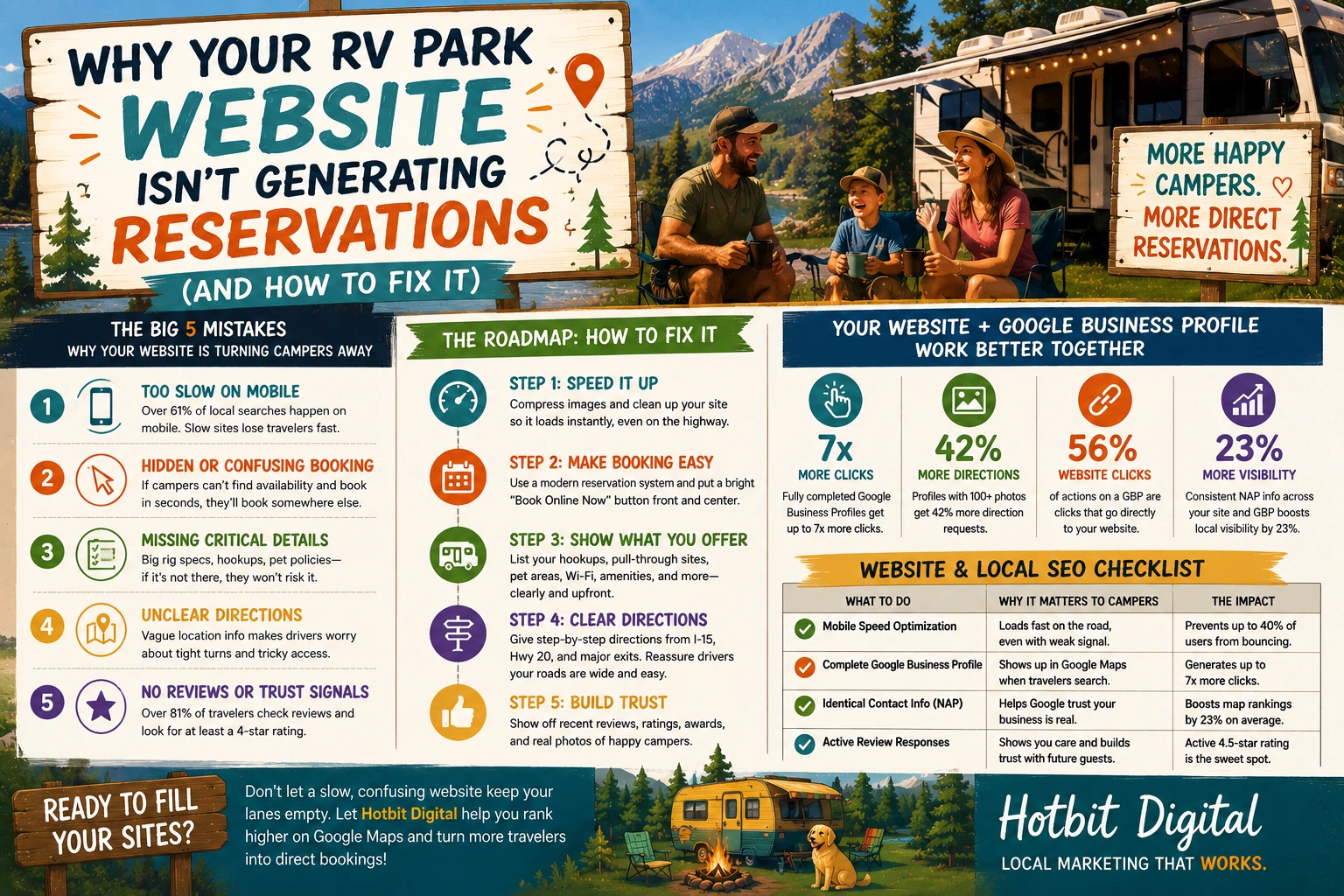
The Big 5 Mistakes: Why Your Website is Turning Campers Away
1. Your Website is Too Slow on Mobile Phones
Most travelers do not plan their stops on a desktop computer at home anymore; roughly 61% of local search interactions happen on mobile devices. Campers search while moving down the highway, often dealing with spotty cell service along the Snake River or up toward Island Park. If your website takes longer than three seconds to load on a smartphone, travelers will lose patience, leave, and look elsewhere.
2. The “Book Now” Button is Hidden or Confusing
When a traveler visits your website, they want to do one thing: find an open space and lock it in. If your homepage forces guests to fill out a generic “Contact Us” email form just to ask about availability, you are creating an unnecessary hurdle. A traveler is not going to wait for an email response when they are only 30 minutes away from town.
3. You’re Missing Critical Details for Big Rigs and Pet Owners
RV owners are fiercely protective of their rigs. They rarely pull off the highway based on a guess. If your website lacks specific details, drivers will move on to a park that answers their layout questions clearly.
4. Your Highway Directions and Location Details Are Unclear
Driving a massive motorhome or towing a heavy travel trailer can be stressful in unfamiliar territory. Travelers need to know exactly how easy it is to get in and out of your campground. If your website only lists a basic street address without clear highway context, drivers may worry about tight turns or hard-to-navigate roads.
5. Lack of Fresh Customer Reviews and Trust Elements
An outdated website with zero customer testimonials acts like a giant “Closed” sign to a passing tourist. Over 81% of consumers use Google to research local reviews, and most look for a minimum rating of at least 4 stars before considering a business. If your website doesn’t feature recent, honest feedback from real campers, visitors will assume your park is run-down or neglected.
The Roadmap: How to Sort Out These Issues and Fill Your Spaces
Fixing these conversion leaks doesn’t require reinventing the wheel. You can systematically update your web layout using these straightforward action steps:
Step 1: Run a Mobile Speed Test & Clean Up Images
Ask your web designer to run your site through a free speed tool (like Google PageSpeed Insights). The main culprit for slow campground websites is usually uncompressed, massive photos. Shrink your image file sizes so your pages load instantly, even on weak 3G or 4G highway networks.
Step 2: Connect a Modern, Frictionless Booking Engine
Switch from outdated email contact forms to a real-time reservation system (like RoverPass, Campspot, or Firefly). Place a bright, contrasting “Book Online Now” button in the top right corner of your website and right in the middle of the mobile screen so it’s impossible to miss.
Step 3: Create a Dedicated “Rig & Amenity Checklist”
Do not make users hunt for specifications. Create a simple bulleted list on your homepage that clearly highlights:
- Power Specs: Separate callouts for 30-amp and 50-amp electrical connections.
- Site Layouts: Exactly how many pull-through RV sites in Idaho Falls you offer for big rigs (e.g., “Fits rigs up to 85 feet”).
- Utilities: Clear labels for full utility hookups (water, sewer, electric) versus dry camping.
- Pet Rules: Mention your dedicated dog runs or pet-friendly walking areas.
Step 4: Map Out Clear Entrance Directions
Provide clear navigation text detailing exactly how to reach your entrance from major local corridors like Interstate 15 (Exit 119), Lindsay Blvd, or US Highway 20. Reassure drivers by explicitly stating if your campground roads are wide, paved, and clear of low-hanging tree branches.
Why Your Website and Google Business Profile (GBP) Must Work Together
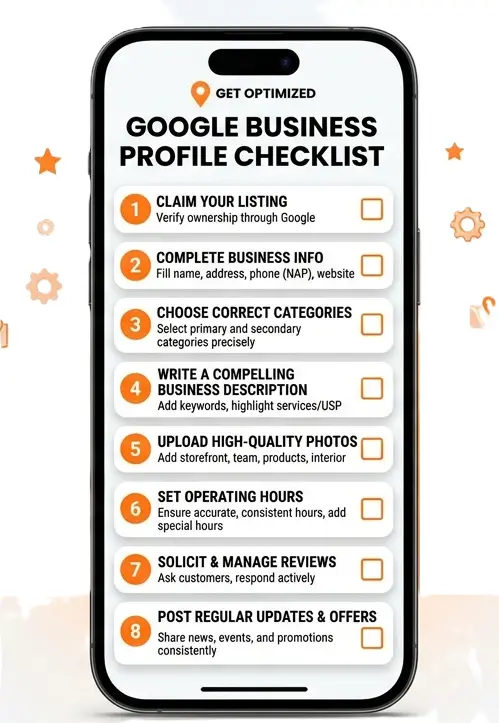
Your website does not live in a vacuum. To dominate local search results in Idaho Falls, your website and your Google Business Profile (GBP)—the listing that shows up on Google Maps—must work as a unified team.
The data proves how powerful this connection is:
- The Power of Completion: Fully completed Google Business Profiles get up to 7x more clicks than incomplete profiles.
- The Visual Impact: Profiles that feature 100 or more real-world photos receive 42% more direction requests from driving travelers than those with sparse galleries.
- The Website Bridge: While your map profile captures the traveler’s initial attention, 56% of actions taken on a Google Business Profile are clicks straight to the business website.
If your Google Maps listing looks incredible but your website is slow and confusing, you are throwing away warm leads. Conversely, keeping your Name, Address, and Phone number (known as NAP data) perfectly identical across your website and your GBP improves your local search visibility by an average of 23%.
Website & Local SEO Checklist | Why It Matters to Campers | The Measurable Impact |
Ensures your site loads on weak highway cell signals. | Prevents up to 40% of users from bouncing away immediately. | |
Complete Google Business Profile | Makes your park visible to drivers using Google Maps. | Generates up to 7x more clicks to your business. |
Identical Contact Info (NAP) | Proves to Google’s system that your business is real and reliable. | Boosts local map visibility rankings by 23% on average. |
Active Review Responses | Shows travelers that the management cares about customer service. | Stems trust; the consumer “sweet spot” is an active 4.5-star rating. |
When to Call in an Idaho Falls SEO Company
If you’re busy running the daily operations of your East Idaho RV park—managing staff, handling landscaping, maintaining clean facilities, and welcoming guests at the front desk—you likely don’t have the time to focus on improving your online presence or figuring out how to increase website visibility through technical SEO work like auditing code, compressing images, or tracking algorithm updates.
That is where a specialized Idaho Falls SEO company comes in. Instead of trying to guess why your website isn’t ranking well or why travelers are leaving without booking, partnering with local experts ensures your digital presence is managed seamlessly.
Professional campground marketing in Idaho Falls bridges the gap between internet searchers and your open campsites. At Hotbit Digital, we specialize in fixing slow websites, managing local directory consistency, optimizing Google Business Profiles, and implementing high-converting design layouts so you can focus on providing an excellent stay for your guests.
Ready to Stop Losing Bookings to Competitors?
Your campground is excellent, your sites are clean, and your location is highly convenient for travelers heading through Eastern Idaho. Don’t let a slow, confusing website keep your lanes empty this season.
Let Hotbit Digital help you optimize your web presence, rank higher on Google Maps, and turn passing highway traffic into guaranteed direct bookings.
Contact Hotbit Digital today to schedule your website audit and start filling your open pull-through sites!
Frequently Asked Questions
Why do travelers leave my RV park website without booking?
Usually, it comes down to slow mobile loading speeds, a hidden or broken booking button, a lack of transparent nightly rates, or missing technical details about your utility layouts (like max rig length or amp limits).
How can I get more RV reservations online?
Streamline the booking process. Put a clear “Book Now” button at the top of your mobile site, keep your real-time calendar updated, and prominently display your best amenities like full utility hookups and wide pull-through spaces.
Does local SEO really help campgrounds near Idaho Falls?
Yes. Most travelers search for accommodations on their phones while driving down I-15 or Highway 20. Effective local SEO for campgrounds ensures your business ranks at the top of Map search results at the exact moment drivers look for a place to park.
Does replying to reviews help my local search rankings?
Yes. Google rewards active businesses. Consistently replying to both positive and negative reviews builds massive trust with future guests and signals to Google that your campground is open and highly attentive.